In pipeline engineering design and construction,
pipe end treatment is a crucial yet often overlooked step. It directly determines the welding quality, connection reliability, system sealing, and on-site construction efficiency. Different fluid media and connection methods require drastically different pipe end shapes.
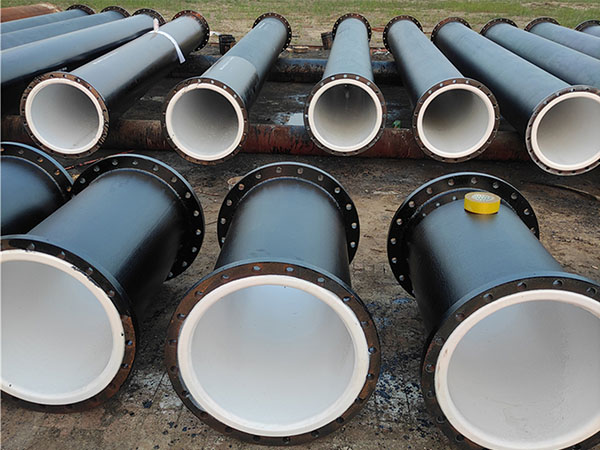
What is pipe end treatment? What is its essence?
Pipe end treatment refers to the mechanical processing or physical shaping of the cross-sections at both ends of the steel pipe before it leaves the factory or during construction. The essence of pipe end treatment is not simply "shaping," but rather addressing three core pain points in pipeline engineering:
How to connect: Determines whether pipes are connected to each other, or to valves, through welding, threaded tightening, or flange anchoring.
How to seal: Ensures that fluid does not leak from the connection gaps under high pressure or corrosive environments.
How to withstand stress: Ensures that the connection does not become a weak point of stress concentration when the system is subjected to internal pressure, thermal expansion and contraction, or mechanical vibration.
Why perform pipe end treatment?
Without proper pipe end treatment, the entire pipeline system will face serious structural and safety hazards. End treatment is primarily based on the following four engineering objectives:
1. Achieving Controllable Pipe Connections
Different pipe ends represent different connection process ecosystems. Whether it's a beveled butt joint, a threaded screw connection, or a grooved clamp connection, proper pipe end treatment is a prerequisite for combining independent steel pipes into a closed, continuous pipeline network.
2. Ensuring Deep Welding Quality
If two steel pipes with a certain wall thickness are directly butted together, the welding wire cannot penetrate deeply, resulting in fatal defects such as insufficient penetration or incomplete weld, with weld strength far lower than the base material. Proper treatment (such as beveling) provides sufficient operating space for the welding torch, controls the shape of the molten pool, and ensures that the weld achieves 100% radiographic testing (RT) level complete fusion.
3. Achieving Efficient System Sealing
The fundamental mission of pipelines is to transport fluids. Whether it's the precision of the thread profile during thread machining or the flatness of the contact surface at the flange end, the accuracy of pipe end treatment directly affects the sealing performance of the connection. Even minor end defects can lead to dangerous fluid leaks during long-term operation.
4. Controlling and Optimizing Stress Distribution
Pipelines are subjected to internal pressure, extreme temperature fluctuations, and external loads during actual operation. If the pipe end treatment is inadequate (e.g., lack of chamfering, abrupt thickness changes), stress concentration can easily occur at the connection. A scientifically designed pipe end transition can effectively disperse these stresses and prevent fatigue cracks.
6 Common Steel Pipe End Treatment Methods
Depending on different construction requirements, steel pipe ends are typically processed into the following six standard forms:
1. Plain End (PE)
Both ends of the pipe are cut flat and perpendicular to the axis, without any threads, beveling, or grooving. The cross-section is at a 90-degree right angle.
Features: Simplest to process, lowest cost, and highly versatile.
Limitations: It cannot be directly used for thick-walled butt welding where high welding quality is required, nor can it be directly connected to threaded or clamp systems. It is typically used for socket welding or slip-on flange connections.
2. Beveled End (BE)
The pipe end section is machined into a bevel at a certain angle (usually 30°, 37.5°, or 45°), retaining a certain blunt edge.
Features: This is the most common and important pipe end form for industrial steel pipes. The bevel provides space for the welding material, a necessary condition for achieving full penetration butt welding.
3. Threaded End (TE)
Standard threads (such as NPT, BSPT) are machined onto the outer wall of the pipe end using a lathe, for embedded physical connections.
Features: No hot work is required; it can be directly screwed onto pipe fittings and valves. The key control points are the integrity of the thread profile, machining accuracy, and rust prevention; otherwise, "slipping threads" or high-pressure seal failure are highly likely.
4. Socket/Spigot End
The socket end is a partially enlarged pipe end to form a female head; the spigot end is a male head that maintains its original diameter or is slightly reduced, and the two can be directly inserted.
Features: Extremely simple alignment, extremely fast on-site construction. However, it requires extremely high dimensional tolerances (accuracy) in pipe machining and is mostly used for cast iron pipes, underground water pipes, or some thin-walled stainless steel pipes.
5. Flared End
The pipe end is uniformly enlarged outward using mechanical force to form a "trumpet mouth" shape to accommodate special joints or sealing gaskets.
Features: The core process requirement is that the enlargement must be "uniform, round, and without cracking." Excessive flaring will lead to severe local wall thinning, resulting in loss of pressure-bearing capacity.
6. Flanged/Stub End
The flange is welded directly to the pipe end, or the pipe end is physically flanged to create a ring face for use with a slip-on flange.
Features: Facilitates quick disassembly, maintenance, and cleaning of the piping system; it is the standard end type for connecting large equipment (such as pumps and heat exchangers).
Frequently Asked Questions (FAQ)
Q: Can thick-walled steel pipes be directly butt-welded using "plain end (PE)"?
A: No. When the steel pipe wall thickness exceeds approximately 3mm (1/8 inch), direct plain end butt welding will prevent the arc from penetrating the entire cross-section, resulting in incomplete internal fusion. Thick-walled steel pipes must be machined into a beveled end (BE) to ensure radiographic testing compliance.
Q: Can threaded (TE) pipe connections be used in high-pressure natural gas systems?
A: Generally not recommended. The sealing performance of threaded connections relies primarily on the engagement between the threads and PTFE tape/sealant. Under conditions of continuous high pressure, strong vibration, or drastic temperature fluctuations, threads are highly susceptible to loosening and leakage. High-pressure natural gas systems should preferentially use beveled ends (BE) for seamless butt welding.
Q: What parameters should be considered when purchasing beveled pipes?
A: In addition to the material and dimensions of the pipe itself, you must specify the bevel angle (e.g., API 5L typically specifies 30°, +5°/-0°) and the root face thickness (typically 1.6mm ± 0.8mm) to the supplier. Substandard bevels will lead to difficulties in on-site welding and increase rework costs.
Summary
The end treatment of steel pipes is far more than a simple cutting process; it is the starting line that determines the "connection method, safety performance, and construction cost" of the entire pipeline system. From the universally available and inexpensive flat end (PE), to the beveled end (BE) essential for high pressure, and to the threaded end (TE) that does not require hot work, each type of pipe end has its irreplaceable engineering value.
 Central Steel


 Language
 English
 Español
 بالعربية
 sales@central-steels.com
 0086-731-8865-5017