 Central Steel
Central Steel
Central Steel
Central Steel
Central Steel
To choose between seamless steel pipe (SMLS) and welded steel pipe (ERW/LSAW/SSAW), you must evaluate four key factors: operating pressure and temperature, chemical exposure, required outside diameter (OD), and total procurement budget.
In short, seamless steel pipes are the definitive choice for small-to-medium diameter applications requiring absolute reliability under high-pressure, high-temperature, or highly corrosive environments. Conversely, welded steel pipes offer a highly cost-effective, readily available solution for low-to-medium pressure fluid transport and heavy-duty structural applications, especially when large-diameter or custom wall-thickness parameters are required.
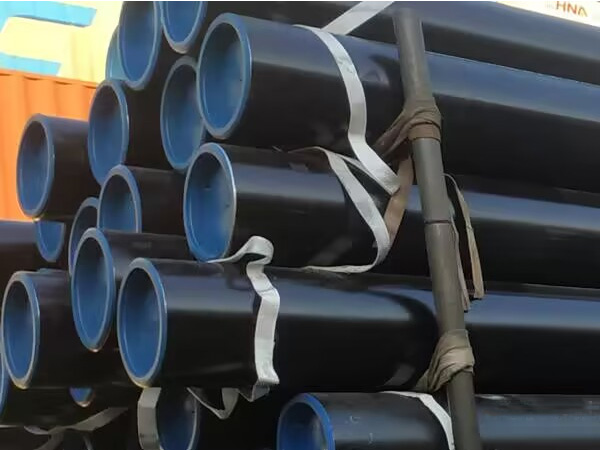
| Project Requirements | Recommended Pipe Type | Primary Engineering Reason |
| High Pressure (>10 MPa) & High Temp | Seamless Steel Pipe | No weld seam; 100% uniform circumferential strength. |
| Strict Budget / Low-to-Medium Pressure | Welded Steel Pipe | Lower manufacturing costs and exceptional price-to-performance ratio. |
| Large Diameter (Over 24 inches / DN600) | Welded Steel Pipe (LSAW/SSAW) | Seamless production becomes logistically and financially impractical at scale. |
| Critical Safety / Flammable & Toxic Media | Seamless Steel Pipe | Eliminates the risk of localized seam corrosion or weld failure leaks. |
The structural difference between a continuous extruded body and a formed-and-welded seam determines exactly where each pipe type belongs in the field.
When to Choose Seamless Steel Pipes:
High-Stress Environments: Because it is entirely seam-free, a seamless pipe possesses identical tensile and yield strengths across its entire circumference. This makes it ideal for high-pressure boiler tubes, hydraulic systems, and critical oil and gas gathering lines.
Precision Mechanical Components: For high-performance industrial equipment—such as automotive driveshafts, marine structures, and aerospace components—seamless tubing provides the precise structural concentricity required to handle massive torsional loads.
Small-to-Medium Diameters: SMLS manufacturing processes are highly optimized for smaller diameters. If your system relies on narrow, high-pressure piping networks, seamless is the industry standard.
When to Choose Welded Steel Pipes:
Ambient Temperature & Utility Lines: If your project involves transporting low-pressure fluids like municipal water, municipal natural gas networks, HVAC systems, or agricultural irrigation, welded pipes provide more than enough safety margins.
Civil Structural Engineering: Welded tubes are the backbone of construction. They are widely specified for building scaffolding, heavy-duty structural steel supports, bridge railings, and structural piling.
Large-Scale & Ultra-Wide Diameters: When a pipeline demands massive diameters (e.g., cross-country water or gas transmission lines), welded processes like LSAW (Longitudinal Submerged Arc) or SSAW (Spiral Submerged Arc) are the only practical choices.
2. Total Cost of Ownership (TCO) & Sourcing Efficiency
Seamless Steel Pipe: Premium Pricing for Maximum Security
The multi-stage manufacturing process of seamless pipes—involving hot piercing, mandrels, and precision cold drawing—demands significant energy and specialized equipment. Consequently, SMLS pipes carry a premium market price and longer production lead times. However, for critical applications, this upfront investment prevents catastrophic operational downtime.
Welded Steel Pipe: Unmatched Cost-Effectiveness
Welded pipes are produced through highly efficient continuous rolling and high-speed automated welding lines. Because the raw materials (steel coils or plates) are highly standardized, the manufacturing costs are significantly lower. If your project features heavy volume requirements in low-risk environments, selecting welded pipes will drastically reduce your total procurement budget.
Understanding how environmental factors interact with your chosen pipe type over a 15-to-30-year lifecycle is essential for preventive maintenance.
Seamless Steel Pipe Lifecycle:
Without a localized heat-affected zone (HAZ) from welding, seamless pipes degrade uniformly. They offer superior resistance to localized stress corrosion cracking (SCC) and can withstand decades of exposure to harsh chemical media, acidic fluids, or cyclical thermal expansion without structural fatigue.
Welded Steel Pipe Lifecycle:
Modern non-destructive testing (NDT)—including ultrasonic, eddy current, and X-ray inspections—ensures that modern welded seams are incredibly strong. However, if a pipe is exposed to improper welding parameters during manufacturing or installed in an overly aggressive corrosive environment without proper anti-corrosion coating (like 3PE or FBE), the weld seam remains a theoretical vulnerability point for micro-cracks or accelerated corrosion.
Read more : What is seamless steel pipe?


 Language
 English
 Español
 بالعربية
 sales@central-steels.com
 0086-731-8865-5017