 Central Steel
Central Steel
Central Steel
Central Steel
Central Steel
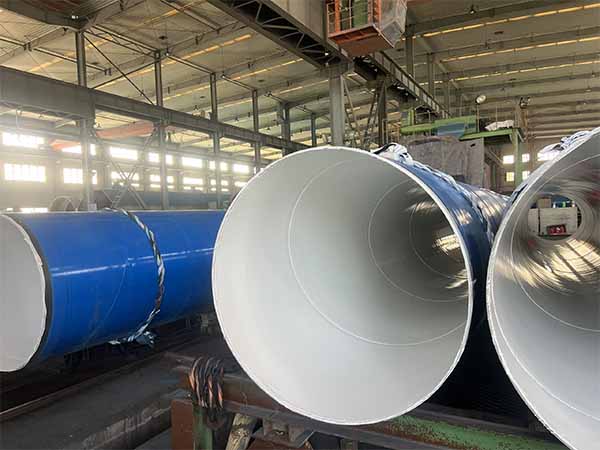
Spiral welded pipe is made by rolling a steel coil into a spiral shape and then welding it along the spiral direction using submerged arc welding. The resulting weld is spiral-shaped. It is a large-diameter steel pipe mainly used in large-diameter, low-to-medium pressure applications.
2. Structural Characteristics and Precision
In summary, ERW steel pipes dominate the small-to-medium diameter pipe market due to their high efficiency, high precision, low residual stress, and automation advantages, while spiral pipes are irreplaceable in large-diameter applications due to their economic advantages.
ERW and spiral pipe standards
The applicable standard is more important than simply identifying the pipe as ERW or spiral welded.
Common specifications include:
|
Standard |
Typical product direction |
Common applications |
|
API 5L |
Seamless and welded line pipe |
Oil and gas, water and other pipeline transportation |
|
ASTM A53 |
Seamless and welded steel pipe |
General mechanical and pressure applications, water, steam and air |
|
ASTM A252 |
Welded and seamless steel pipe piles |
Foundation and piling applications |
|
EN specifications |
Various welded pipe products |
European structural and piping applications |
|
Project-specific specifications |
ERW, SSAW or other pipe |
Infrastructure, industrial and energy projects |
FAQ about ERW steel pipe vs. spiral pipe
1. Is ERW pipe better than spiral pipe?
Not necessarily. ERW pipe is often advantageous for small- and medium-diameter applications requiring good dimensional control and efficient production. Spiral welded pipe is particularly competitive for large-diameter applications. The better option depends on the project specification, dimensions, pressure requirements and application.
2. What is the main difference between ERW and spiral pipe?
The main difference is the weld configuration and manufacturing process. ERW pipe normally has a longitudinal weld produced by electric resistance welding, while spiral pipe has a helical weld produced by submerged arc welding.
3. Is spiral welded pipe suitable for high-pressure pipelines?
Spiral welded pipe can be used for pipeline applications when it is manufactured to an applicable line-pipe specification and meets the project's pressure, material, welding, inspection and testing requirements. The pipe's pressure capability cannot be determined from the spiral welding process alone.
4. Is ERW pipe suitable for oil and gas pipelines?
Yes. ERW pipe can be used for oil and gas pipeline applications when it meets the applicable line-pipe specification, such as API 5L, and satisfies the required grade, dimensions, weld quality, testing and project design requirements. API 5L includes ERW and submerged arc welded line pipe.
5. Why is spiral pipe commonly used for large-diameter pipelines?
The spiral forming process can produce large pipe diameters efficiently from steel coil. This provides a major manufacturing advantage for large-diameter water transmission, drainage, infrastructure and certain pipeline applications.
Summary
The main difference between ERW steel pipe and spiral welded pipe is their manufacturing process and the diameter range in which each process is most practical.
ERW pipe is generally advantageous for standardized small- and medium-diameter applications where dimensional consistency, efficient production and a longitudinal weld are important. Spiral welded pipe is particularly advantageous for large-diameter applications because spiral forming allows large pipe diameters to be manufactured efficiently from steel coil.


 Language
 English
 Español
 بالعربية
 sales@central-steels.com
 0086-731-8865-5017