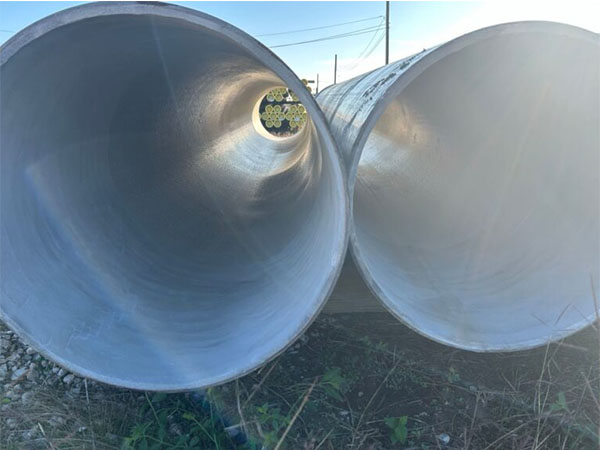
Mild Steel Cement Lined (MSCL) pipes are among the most reliable, durable, and cost-effective pipes in the global fluid transport infrastructure. Combining the high tensile strength and ductility of low-carbon steel with proactive internal corrosion protection and hydraulic efficiency from factory-pre-coated
cement mortar, MSCL pipes demonstrate unparalleled performance in high-pressure and large-diameter applications.
This article will delve into the core application areas, specific systems, and engineering advantages driving the choice of MSCL pipes.
1. Main Application Areas and Operating Systems
Municipal Drinking Water Transport and Supply
Municipal water supply infrastructure is the largest market for MSCL pipes globally; they are critical pipelines in regional water supply networks.
Raw Water Intake Trunks: Used to transport untreated water over long distances from reservoirs, lakes, rivers, or underground aquifers to municipal water treatment plants.
Drinking Water Trunks: Transport high-pressure treated drinking water from treatment plants to urban water supply networks and elevated storage tanks.
Buyers chose MSCL because: the cement mortar lining is non-toxic and meets global drinking water health standards (e.g., NSF/ANSI 61 or BS 6920). Furthermore, the smooth inner surface has a high Hassen-Williams coefficient of friction (C value 140-150), significantly reducing frictional losses and decades of operating pumping costs.
Wastewater Collection Systems
Treating municipal wastewater and industrial wastewater requires materials that can withstand structural fatigue and physical abrasion caused by entrained solids.
Wastewater Lifting Trunks (Pressure Trunks): Pressurized pipelines that transport untreated or filtered wastewater from low-lying lift pump stations to centralized wastewater treatment plants.
Wastewater Discharge Pipelines: Safely discharge treated wastewater into river basins or coastal waters.
Customers chose MSCL because: the cement lining offers strong resistance to physical abrasion, resisting erosion by suspended solids, gravel, and sand. For highly corrosive septic tanks or hydrogen sulfide environments, high-alumina cement (CAC) linings can safely handle acidic environments.
Seawater Desalination Plants and Coastal Marine Engineering
Seawater environments contain high concentrations of corrosive chloride ions, which can cause severe pitting corrosion in standard bare steel pipes.
Seawater Intake and Brine Discharge Piping: Connecting offshore intake structures to onshore reverse osmosis (RO) facilities.
Coastal Power Plant Cooling Water Circulation Systems: Transporting large volumes of seawater for turbine cooling systems.
Reasons Customers Choose MSCL: MSCL piping offers significant economic advantages compared to expensive duplex stainless steel roller conveyors.
Industrial Process Water and Power Plant Facilities
Heavy industrial complexes—including thermal/hydropower plants, steel mills, petrochemical plants, and paper mills—require high-capacity utility networks.
Circulating Cooling Water (CCW) Systems: High-flow-rate water pipes supplying cooling towers and heat exchangers.
Fire Water Main Pipelines: Underground ring main pipes requiring high burst strength and permanent availability, and free from internal scaling or clogging of fire nozzles.
Slurry and tailings transportation: transportation of mineral slurry or fly ash in mining and coal-fired power plants.
1. Performance & System Matrix
|
Application System
|
Primary Challenge Solved
|
Standard Diameter Range
|
Core Value Driver
|
|
Potable Water Trunk Mains
|
Internal rust, scale, and high pumping power loss
|
DN300 – DN3000+
|
Smooth flow (C-value 140+), zero tuberculation
|
|
Sewage Force Mains
|
Internal sand/grit abrasion & heavy earth loads
|
DN300 – DN2200
|
Superior structural strength & abrasion resistance
|
|
Seawater Intake/Outfall
|
Severe chloride pitting and marine corrosion
|
DN600 – DN3200
|
High cost-effectiveness vs. exotic duplex alloys
|
|
Industrial Firewater
|
Scale buildup blocking critical fire control valves
|
DN150 – DN800
|
High pressure rating, zero scaling or flaking
|
3. Reasons for Choosing MSCL Pipes
Active Corrosion Passivation: Cement hydration creates an alkaline environment (pH 12-13) inside the pipe. This high alkalinity forms an active passivating oxide film on the steel surface, preventing corrosion even if moisture penetrates the lining.
Self-Healing Properties: Microcracks in the cement lining heal naturally over time. When water comes into contact with unhydrated cement particles, calcium hydroxide and calcium carbonate crystals form, filling and sealing the tiny cracks.
High Structural Integrity: The excellent ductility and yield strength of low-carbon steel enable MSCL pipes to effectively resist the effects of water hammer, foundation movement, traffic loads, and high internal pressure peaks.
Lower Cost: For pipes larger than DN600 (24 inches) in diameter, the total material cost per meter of MSCL pipe is significantly lower compared to ductile iron, solid HDPE, or stainless steel pipes.
Summary
Cement-lined low-carbon steel pipe (MSCL) remains an indispensable choice for modern water supply and wastewater treatment infrastructure. MSCL pipes combine the strength of steel with the alkaline protection of cement mortar, and their designed service life can reach 50 to 100 years or more, with very low maintenance requirements.
 Central Steel


 Language
 English
 Español
 بالعربية
 sales@central-steels.com
 0086-731-8865-5017