 Central Steel
Central Steel
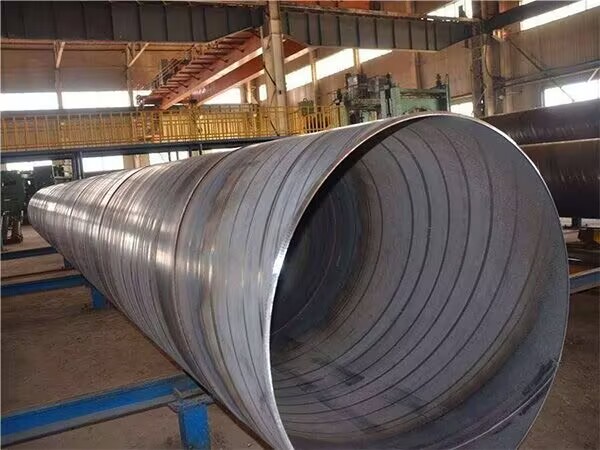
The main differences are:
| Features |
ERW steel pipe |
SSAW steel pipe |
|
Welding mode |
Straight welding |
Spiral welding |
|
Pipe specifications |
minor-caliber |
large-caliber |
|
Weld appearance |
Straight weld |
Spiral weld |
|
Scope of application |
Low pressure transport, structural tube |
High-pressure transport, large diameter pipeline |
|
Manufacturing cost |
Lower cost |
Higher cost |
|
Pipeline performance |
Suitable for low pressure environment |
Suitable for large caliber, high pressure environment |
Frequently Asked Questions
1. What is the main difference between ERW and SSAW steel pipe?
The main difference is the welding process and weld seam configuration. ERW pipe uses electrical resistance welding to create a straight longitudinal seam, while SSAW pipe uses submerged arc welding to create a spiral seam. ERW is commonly used for small- to medium-diameter products, whereas SSAW is often selected for large-diameter pipe projects.
2. Is ERW steel pipe stronger than SSAW steel pipe?
Not necessarily. Strength depends on the steel grade, chemical composition, mechanical properties, wall thickness, manufacturing quality, and applicable product requirements. The welding process alone is insufficient to determine which pipe is stronger. Buyers should compare certified material properties and the relevant test results for the specific products.
3. Is SSAW steel pipe suitable for high-pressure pipelines?
SSAW pipe can be used in qualifying pressure-pipeline applications when the applicable standard and project design permit it and the pipe meets all required material, dimensional, weld-quality, and testing criteria. Its suitability must be evaluated for the specific service; SSAW should not automatically be classified as either a high-pressure or low-pressure product.
4. Which is more economical, ERW or SSAW steel pipe?
ERW is often economical for standard small- and medium-diameter pipe produced in volume, while SSAW can be cost-effective for large-diameter pipe. However, the final price depends on the outside diameter, wall thickness, steel grade, order quantity, inspection scope, coating, and delivery requirements.
Conclusion
ERW and SSAW steel pipes serve different manufacturing and project requirements. ERW is often a practical choice for standard small- and medium-diameter products, while SSAW offers flexibility for large-diameter applications.


 Language
 English
 Español
 بالعربية
 sales@central-steels.com
 0086-731-8865-5017