En la ingeniería de la fundación, la construcción del cofferdam, y el desarrollo del puerto, los pilotes de hoja son no sólo el “esqueleto” estructural pero también un equilibrio crucial entre seguridad y coste. Además del diseño de la forma, el grado de acero es uno de los factores más críticos que determinan el rendimiento de las planchas.
Elegir el grado incorrecto no solo aumenta los costos de materiales, sino que también puede generar riesgos estructurales. Este artículo proporcionará un análisis en profundidad de las principales
Pila de hoja de acero(EN, JIS, ASTM, GB) para ayudarle a tomar las decisiones más informadas.
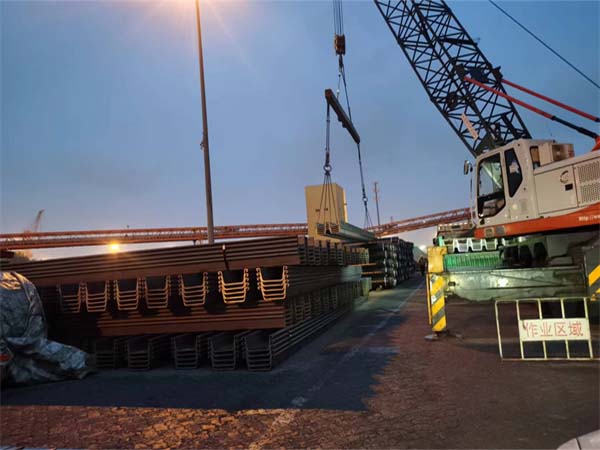
¿Por qué es tan importante el "grado" de las pilas de hojas?
Los grados de acero se clasifican de acuerdo con su composición química y propiedades mecánicas. En aplicaciones de hoja de pila, el grado determina directamente:
Resistencia estructural y capacidad de carga: los grados de mayor resistencia significan una mayor resistencia a la flexión.
Eficacia de la construcción: La buena soldabilidad reduce dificultad de la construcción.
Durabilidad a largo plazo: en espray de sal o ambientes corrosivos, los grados específicos pueden ampliar perceptiblemente vida de servicio.
Optimización de costos: los grados de mayor resistencia a menudo permiten secciones transversales más ligeras, lo que reduce los costos generales de material.
Comparación de los estándares convencionales y los grados comúnmente utilizados para el apilamiento de láminas de acero a nivel mundial
Diferentes países y regiones utilizan diferentes estándares en la ingeniería de pilas de chapa de acero. La siguiente tabla resume las normas de materiales más utilizadas en todo el mundo:
Sistema estándar Estándares aplicables Núcleo Grados comúnmente utilizados
|
Standard System
|
Applicable Standards
|
Core Common Brand Names
|
|
EN
|
EN 10248
|
S240GP, S355GP
|
|
JIS
|
JIS A5523
|
SY295, SY390
|
|
ASTM
|
ASTM A572 / A690
|
Grade 50, A690
|
|
GB
|
GB Standards
|
Q235B, Q355B
|
Core Advantages of Four Standard Systems
1. European Standard (EN 10248)
EN 10248 is currently the most widely used
hot-rolled steel sheet pile standard globally.
S240GP/S270GP: Mostly used in temporary works or projects with low loads.
S355GP: The most popular grade, widely used in permanent support and deep foundation systems.
S390GP: Designed specifically for heavy infrastructure and marine engineering.
2. Japanese Standard (JIS)
SY295: High cost-performance ratio, the first choice for general construction and temporary support.
SY390: Provides higher yield strength, suitable for ports, deep foundations and heavy retaining structures.
3. American Standards (ASTM)
ASTM A572 Grade 50: High-strength low-alloy steel, combining strength and weldability, suitable for heavy construction.
ASTM A690: A star material for marine engineering. Designed specifically for coastal environments, its corrosion resistance is far superior to ordinary carbon steel, making it the best choice for docks, seawalls, and offshore structures.
4. Chinese Standards (GB)
Q235B: Classic lightweight structural steel.
Q355B: With technological advancements, Q355B is increasingly popular in large-scale projects due to its excellent balance of strength and weldability.
Selection Guide: How to Choose the Most Suitable Grade and Designation?
When selecting sheet pile grades, professional engineers typically weigh the following four dimensions:
Environmental Challenges: Is the project located in a coastal area with high salt spray? If so, ASTM A690 should be given priority.
Load Requirements: Deep foundation pits or heavy retaining walls require higher yield strength (such as S355GP or SY390) to resist earth pressure.
Service Life: For temporary support projects, SY295 or S240GP is recommended to save on budget; permanent structures require a higher level of durability.
Construction Feasibility: While high-strength steel has superior performance, it places more stringent requirements on welding processes.
FAQ: Frequently Asked Questions about Sheet Pile Grades
Q: Which is more commonly used, S355GP or SY390?
A: These two grades are "evergreen" under EN and JIS standards, respectively, because they achieve an excellent balance between cost and strength.
Q: Is a higher strength grade of steel always a better choice?
A: Not necessarily. While high-strength steel can increase load-bearing capacity and reduce weight, its material cost and welding complexity also increase. A cost-effectiveness assessment should be conducted based on the actual needs of the project (such as water depth and soil conditions).
Q: Why does marine engineering prefer ASTM A690?
A: Because it has a special chemical composition that provides excellent corrosion protection in the splash zone, significantly extending the life of the structure.
Read more : Steel grades for piling pipe
 Central Steel


 Idiomas
 English
 Español
 بالعربية
 sales@central-steels.com
 0086-731-8865-5017